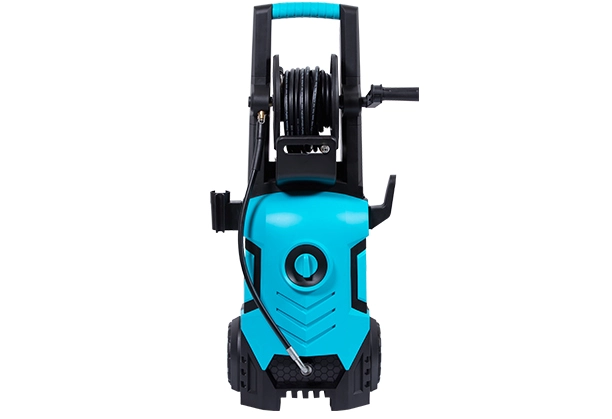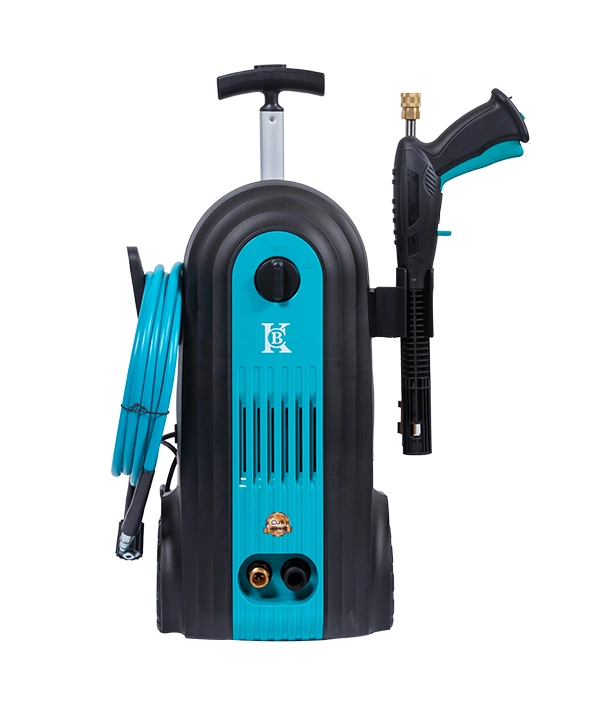
If your core question is "Which motor type is better for high-pressure washers?", the direct answer is:
For frequent, heavy-duty, or commercial cleaning tasks, an induction motor pressure washer is superior.
Brush motor pressure washers are suitable only for light, occasional use due to lower durability and shorter lifespan.
Now, let's dive into the professional breakdown that matters to equipment buyers, distributors, and facility managers.
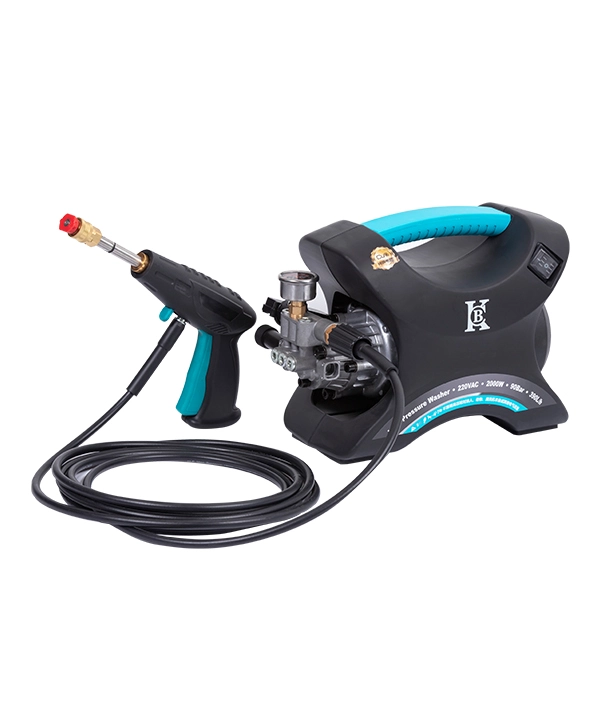
An induction motor uses electromagnetic induction to generate rotation, requiring no carbon brushes, while a brush motor relies on physical brushes to transfer current, causing friction and wear.
Industry-level implications:
| Feature | Induction Motor Pressure Washer | Brush Motor Pressure Washer |
Lifespan | 2–3× longer (2,000–4,000 hours) | 300–800 hours |
Duty Cycle | Designed for long, continuous operation | Not suitable for extended runtime |
Noise Level | 20–30% quieter | Noticeably louder |
Heat Management | Runs cooler due to no friction | Heats quickly → needs cooling breaks |
Maintenance Needs | Very low | Brushes require replacement |
Price | Higher upfront | Lower upfront |
Induction motors avoid brush friction, which eliminates:
Carbon brush wear
Commutator erosion
Spark generation
Heat buildup
This is why most commercial, industrial, and high-PSI pressure washers rely exclusively on induction motors.
Engineering insight:
Induction motors have fewer moving parts and typically run at lower RPM (around 1,400–1,800), placing less mechanical stress on the pump and bearings. This directly extends washer lifespan.
Not always—but they struggle under sustained load.
Brush motors can deliver high peak RPM, but they suffer under:
Long washing sessions
High-pressure nozzles
Continuous water flow
Industrial detergents
Hot environments
In practice, brush motors are acceptable for short, intermittent household use but unsuitable for:
Logistics centers
Construction sites
Car detailing shops
Agricultural cleaning
Industrial workshops
Rental equipment businesses
Yes—because cleaning efficiency is tied to pump stability, and induction motors provide:
More stable RPM
Better torque under load
Less pressure fluctuation
Reduced pump cavitation
This results in:
Consistent pressure output (PSI)
Better cleaning of stubborn dirt, grease, and mud
While the motor doesn't directly increase PSI or GPM, its stability ensures the washer maintains peak performance during long operations.
If you use a pressure washer more than 1–2 hours per week, YES.
The TCO (total cost of ownership) is significantly lower:
Brush Motor → Hidden Costs
Carbon brush replacement
Higher failure rate
More heat → pump damage
Frequent downtime
Induction Motor → Business-Grade Reliability
Minimal maintenance
Ideal for daily or heavy use
Longer pump compatibility
Lower energy loss
This is why professional and industrial buyers overwhelmingly choose induction motors.
Q: Are induction motor pressure washers quieter?
Yes. They usually operate 10–15 dB quieter because there's no brush friction. For indoor cleaning (garages, workshops), this is a major advantage.
Q: Do induction motors require less maintenance?
Absolutely. The only routine checks needed are:
Regular pump lubrication
Occasional bearing inspection
Brush motors, in contrast, require carbon brush replacements and commutator cleaning.
Q: Why are induction motor pressure washers heavier?
Induction motors use copper windings and larger stators, adding weight. However, many brands—including OEM/ODM factories—use integrated trolley frames to offset this.
Q: Can a brush motor pressure washer be used for commercial cleaning?
Technically yes, but the motor will not withstand continuous commercial usage. Expect early failure and frequent overheating.
Choose an Induction Motor Pressure Washer if you:
Run a cleaning service business
Own a car wash or detailing shop
Work in logistics, agriculture, or construction
Need the washer for daily or long-duration tasks
Want a low-maintenance, long-lasting machine
Choose a Brush Motor Pressure Washer if you:
Only clean your patio/driveway occasionally
Are looking for the lowest entry price
Don't need long continuous runtime
For most business users, the induction motor is the clear winner.
The induction motor wins by a wide margin in durability, stability, noise, and long-term value.
A brush motor is only suitable for light, short-term consumer use, while an induction motor pressure washer is the professional-standard solution for anyone who values reliability, performance, and lower lifetime costs.
 English