Choosing the right pressure washer for home cleaning is not only about maximum pressure or water flow. The motor type, pump design, cleaning frequency, and application requirements all influence the overall performance of a pressure washer.
Among electric cleaning machines, brush motor and induction motor pressure washers are two common solutions. A brush motor pressure washer is usually designed with a compact structure and practical operation, while an induction motor pressure washer is often selected for users who require stable performance during frequent cleaning tasks.
Understanding the differences between these two motor technologies can help homeowners choose a suitable cleaning solution for cars, gardens, outdoor surfaces, and other household applications.
The main difference between brush motor and induction motor pressure washers lies in their internal motor structures.
A brush motor uses carbon brushes to transfer electrical current during operation. This design allows manufacturers to develop compact and lightweight machines that are suitable for regular household cleaning.
An induction motor works through electromagnetic induction without direct contact between internal components. This structure is commonly used in applications where stable operation and durability are important.
For users comparing different options, the difference between induction motor vs carbon brush motor pressure washer mainly depends on cleaning frequency, operating time, and expected performance requirements.
Yes. A brush motor pressure washer can be an effective choice for many household cleaning tasks.
For homeowners who regularly clean vehicles, outdoor furniture, gardens, and household surfaces, brush motor models provide several practical advantages.
Brush motor pressure washers are commonly designed with a compact structure, making them easier to transport and store.
For residential users, equipment size is an important consideration because cleaning tools often need to be stored in garages, storage rooms, or small spaces.
A suitable brush motor pressure washer can handle common cleaning tasks, including:
Car washing
Garden equipment cleaning
Outdoor furniture maintenance
Patio and surface cleaning
However, cleaning performance depends not only on the motor type but also on factors such as pump structure, pressure output, flow rate, and nozzle design.
An induction motor pressure washer is often preferred by users who need more frequent cleaning operations or longer working periods.
Compared with traditional brush motor systems, induction motors generally offer:
The motor structure allows smoother operation during repeated cleaning tasks.
Because induction motors do not rely on carbon brushes for current transmission, they generally have fewer contact components inside the motor.
For users who regularly clean larger outdoor areas, vehicles, or multiple surfaces, an induction motor solution may provide better suitability.
For users interested in understanding this type of equipment, an induction motor pressure washer is commonly considered for applications requiring stable cleaning performance.
The best choice depends on your cleaning requirements.
| Comparison | Brush Motor Pressure Washer | Induction Motor Pressure Washer |
|---|---|---|
| Suitable users | Homeowners and regular household users | Users requiring frequent operation |
| Design | Compact and lightweight | More focused on stable operation |
| Application | Cars, gardens, outdoor equipment | Larger cleaning tasks and repeated use |
| Main advantage | Convenience and portability | Durability and operating stability |
For occasional home cleaning, a well-designed brush motor pressure washer can provide sufficient performance. For users who need longer operating periods, an induction motor model may be a better choice.
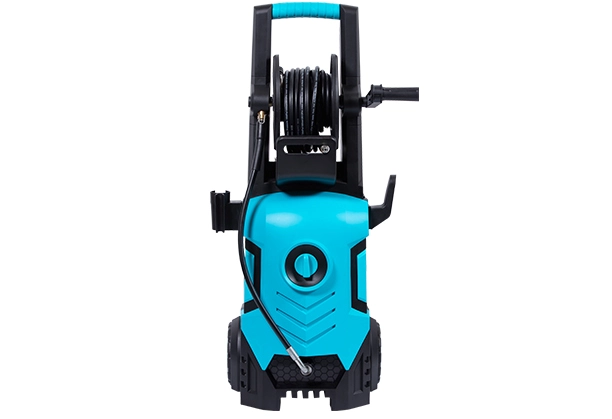
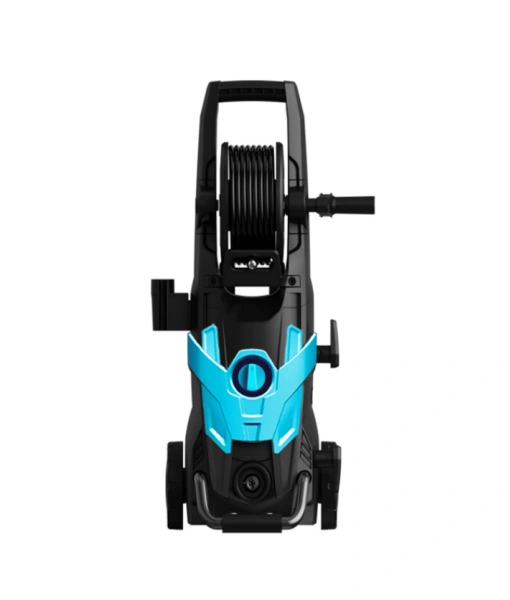
The KLC-KINGK Vertical High Pressure Washer represents a high-end brush motor pressure washer solution designed for users who need stronger cleaning performance for home and semi-commercial applications.
Unlike ordinary three-plunger pump systems, KLC-KINGK adopts a four-plunger pump design, which provides higher pressure and larger flow rate to improve cleaning efficiency, especially when dealing with stubborn dirt or larger cleaning areas.
The pump structure is one of the key differences between standard and high-performance pressure washers.
KLC-KINGK uses a four-plunger pump instead of a traditional three-plunger pump design. This structure helps increase pressure output and water flow, allowing users to complete demanding cleaning tasks more efficiently.
KLC-KINGK is equipped with a high-performance aluminum high-pressure pump featuring corrosion resistance and long service life.
The pump system helps maintain stable cleaning performance across different applications.
For frequent cleaning tasks, user experience is also important.
KLC-KINGK includes:
Auto start-stop system: the machine runs when the trigger is pulled and stops when released
Integrated storage system for cables and accessories
Multi-functional adjustable-angle spray nozzle
Ergonomic design for more comfortable operation
These features improve convenience during daily cleaning.
Based on Junhe Clean's product information, KLC-KINGK can support multiple cleaning applications, including:
The adjustable-angle spray nozzle allows users to adapt the water spray direction according to different vehicle cleaning requirements.
With higher pressure and flow performance, KLC-KINGK can help remove dirt from outdoor surfaces and equipment.
The sturdy structure and powerful cleaning capability make KLC-KINGK suitable for some semi-commercial cleaning scenarios.
The KLC-KINGK Vertical High Pressure Washer provides different power configurations to meet various cleaning requirements. Users can compare pressure, flow rate, and power specifications to select the most suitable model.
| Model | Power | Max. Pressure | Working Pressure | Flow Rate | Weight |
|---|---|---|---|---|---|
| KLC-KINGK-150C | 1600W | 80/120 Bar | 52/81 Bar | 8.5/6.5 L/min | 10kg |
| KLC-KINGK-150C | 1900W | 110/150 Bar | 71/100 Bar | 8/5.8 L/min | 10kg |
Different configurations allow users to select suitable performance according to voltage requirements and cleaning needs.
Besides motor type, users should also evaluate several important factors.
Consider whether the main application is vehicle washing, garden maintenance, outdoor surface cleaning, or semi-commercial use.
Higher pressure does not always mean better cleaning results. The ideal combination depends on the surface type and dirt level.
The pump design directly affects water pressure and cleaning efficiency. Features such as KLC-KINGK's four-plunger pump can provide stronger cleaning performance compared with standard structures.
For home users, compact design and integrated storage can improve daily convenience.
Both brush motor and induction motor pressure washers have their own advantages. Brush motor models are suitable for many household cleaning applications due to their compact design and convenient operation, while induction motor models are often preferred for users requiring frequent and extended cleaning.
The KLC-KINGK Vertical High Pressure Washer demonstrates how a high-performance brush motor pressure washer can achieve stronger cleaning results through features such as a four-plunger pump, aluminum high-pressure pump, adjustable nozzle, and ergonomic design.
By considering motor type, pump performance, cleaning frequency, and application requirements, users can select the right pressure washer solution for efficient home and outdoor cleaning.
Brush motor pressure washers use carbon brushes for electrical transmission, while induction motor pressure washers use electromagnetic induction technology. Their differences mainly affect operating characteristics and suitable applications.
Yes. A brush motor pressure washer can handle many household cleaning tasks, including car washing, outdoor maintenance, and garden equipment cleaning.
KLC-KINGK uses a four-plunger pump design instead of a traditional three-plunger structure, providing higher pressure and larger flow rate for improved cleaning efficiency.
For frequent cleaning tasks, users should consider motor type, pump design, pressure performance, and overall durability rather than only focusing on one factor.
Users should evaluate motor type, pressure, flow rate, accessories, portability, and cleaning applications before making a decision. A suitable electric pressure washer can provide better cleaning efficiency for different scenarios.
 English